SCIENCES PO
INTRODUCTORY AI COURSE · SESSION 1
From Programs
to AI
When does software become AI?
PRESENTED BY
Evan Dufraisse
26 August 2026

Evan Dufraisse
CURRENT FOCUS
Foundation models for language and speech



Research Engineer — MBZUAI–IFM
Current work — Jais and K2 foundation models
PhD in Computer Science (2024)

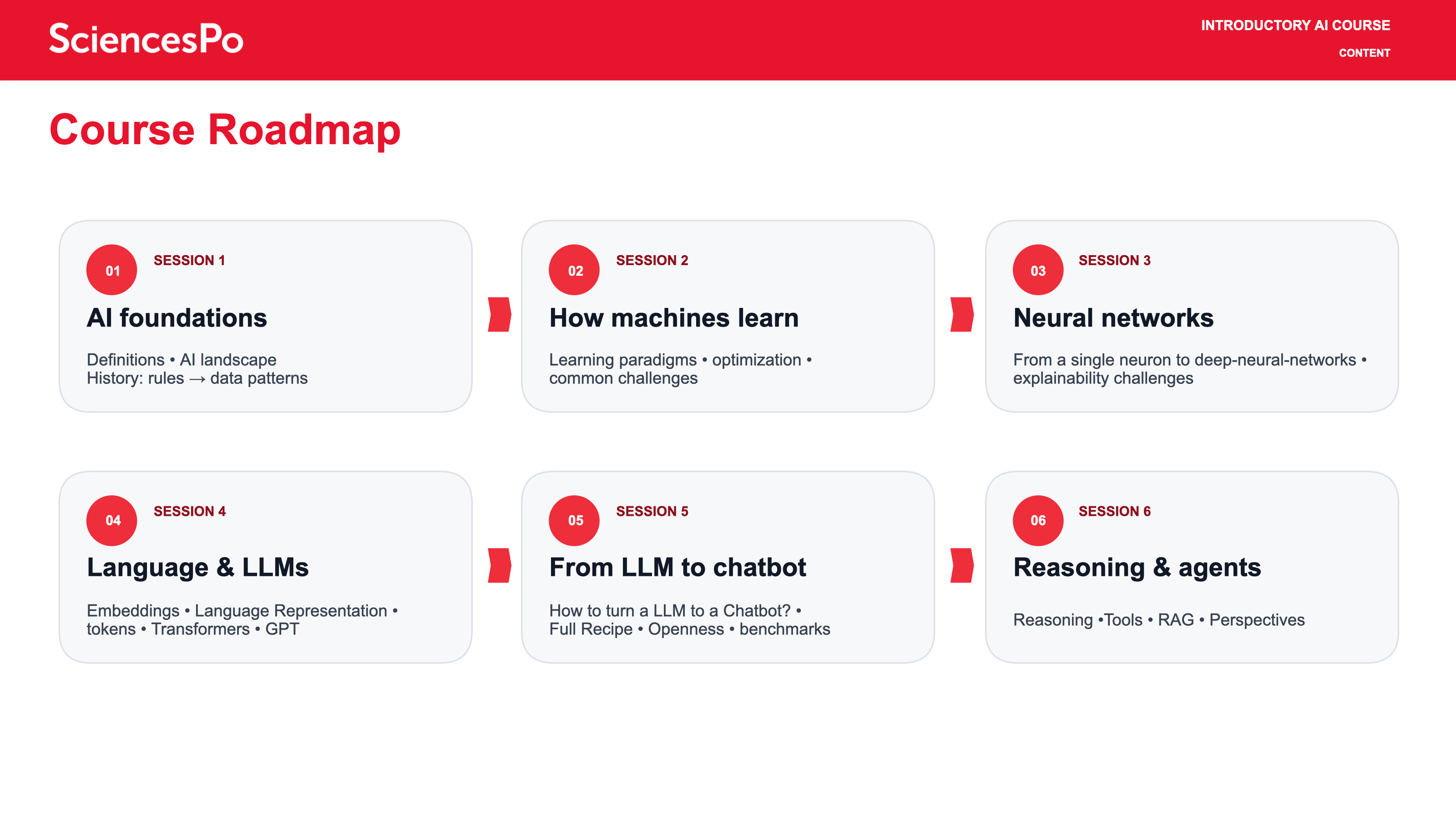
INTRODUCTORY AI COURSE CONTENT 01 SESSION 1 AI foundations Definitions • AI landscape History: rules → data patterns 02 SESSION 2 How machines learn Learning paradigms • optimization • common challenges 03 SESSION 3 Neural networks From a single neuron to deep-neural-networks • explainability challenges 04 SESSION 4 Language & LLMs Embeddings • Language Representation • tokens • Transformers • GPT 05 SESSION 5 From LLM to chatbot How to turn a LLM to a Chatbot? • Full Recipe • Openness • benchmarks 06 SESSION 6 Reasoning & agents Reasoning •Tools • RAG • Perspectives Course Roadmap
SCIENCES PO
INTRODUCTORY AI COURSE · SESSION 1
From Programs
to AI
When does software become AI?
PRESENTED BY
Evan Dufraisse
26 August 2026
AI FOUNDATIONS
SESSION 1
CENTRAL QUESTION
Central Question
When does a program start looking like AI, and where does its behavior come from?
AI FOUNDATIONS
SESSION 1
CENTRAL QUESTION
Central Question
When does a program start looking like AI, and where does its behavior come from?
AI FOUNDATIONS
SESSION 1
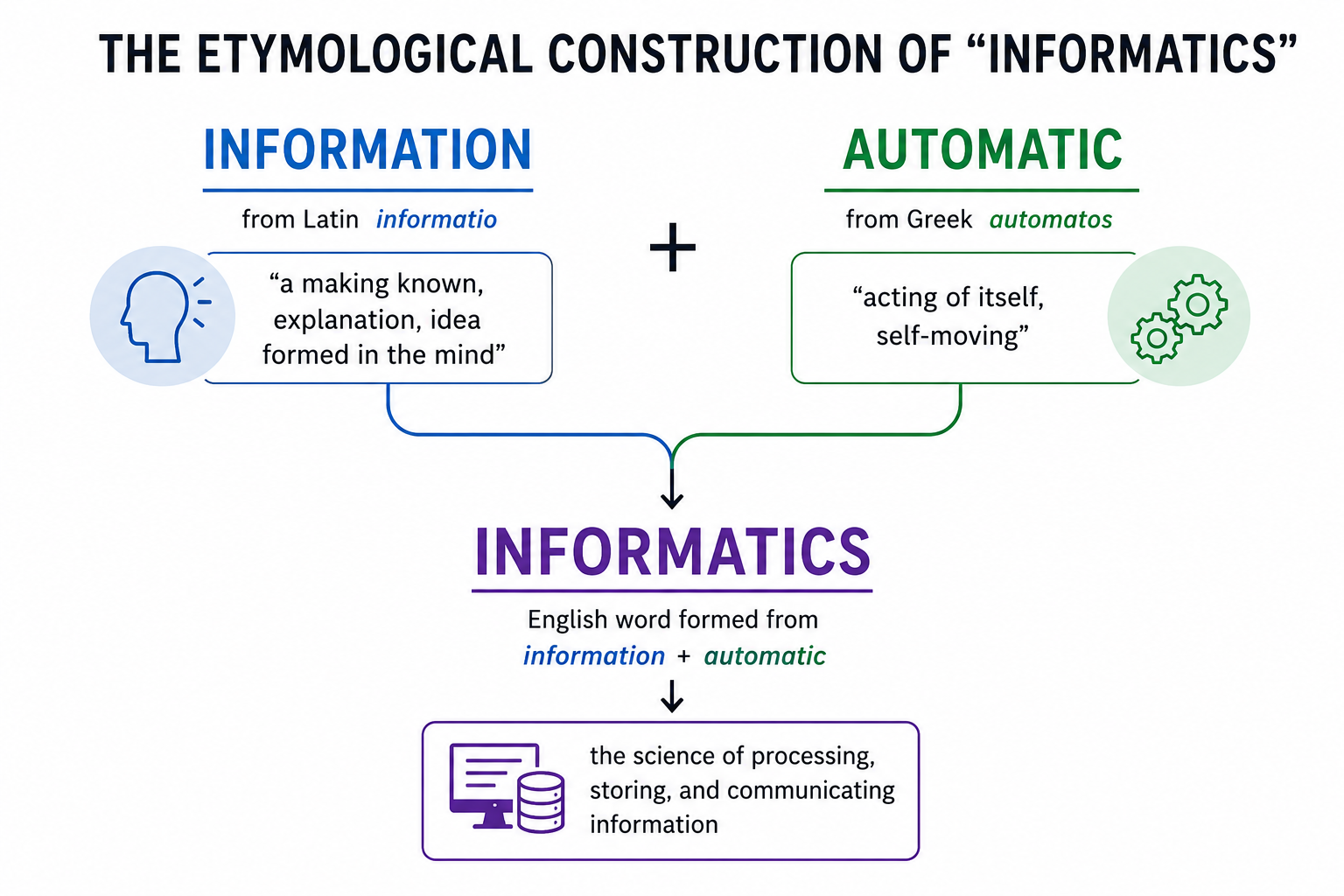
Informatics is the automated processing of data.
DEFINITION
Informatics
The science of how information is processed, stored, and communicated by computational systems.
From raw data → useful information
AI FOUNDATIONS
SESSION 1
DEFINITION
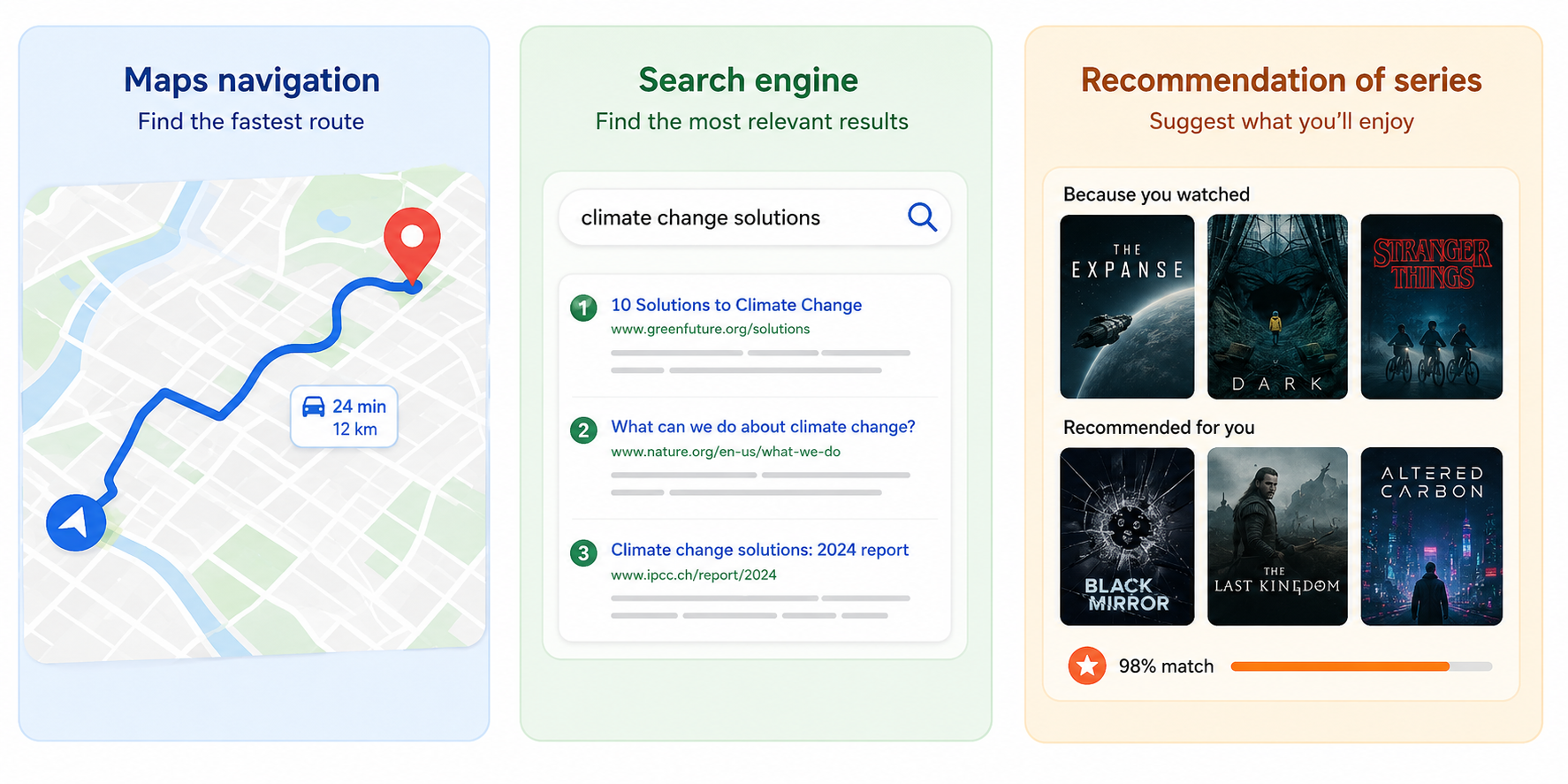
What is an algorithm?
AI FOUNDATIONS
SESSION 1
DEFINITION
The Algorithm of Your Fridge
An algorithm is not necessarily complex!
1. Measure the current temperature.
2. Compare it with the desired temperature.
3. If it is too warm, start the compressor.
4. If it is cold enough, stop the compressor.
5. Wait briefly and repeat.

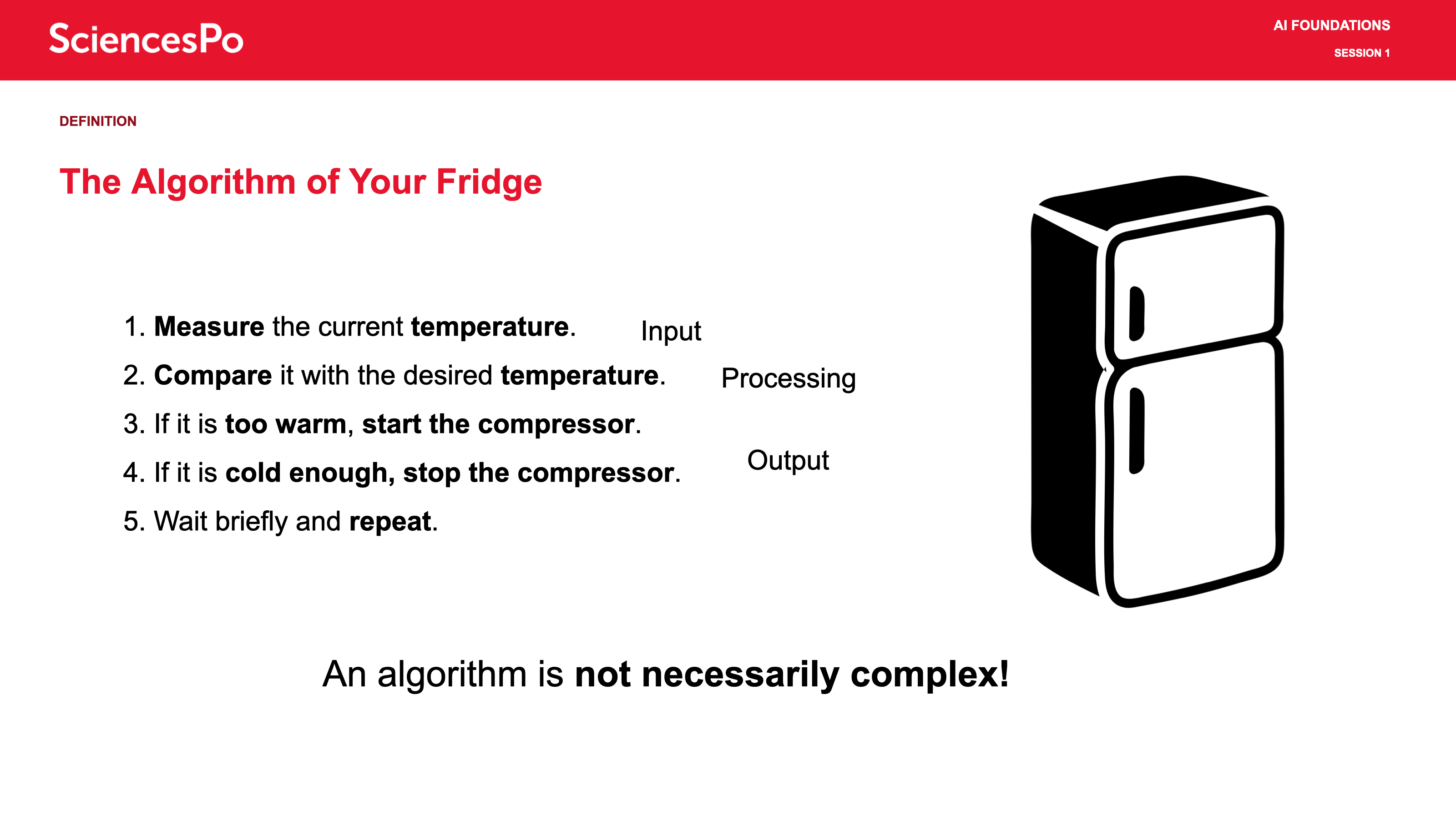
AI FOUNDATIONS SESSION 1 DEFINITION The Algorithm of Your Fridge An algorithm is not necessarily complex! 1. Measure the current temperature . 2. Compare it with the desired temperature . 3. If it is too warm , start the compressor . 4. If it is cold enough, stop the compressor . 5. Wait briefly and repeat . Input Processing Output
AI FOUNDATIONS
SESSION 1
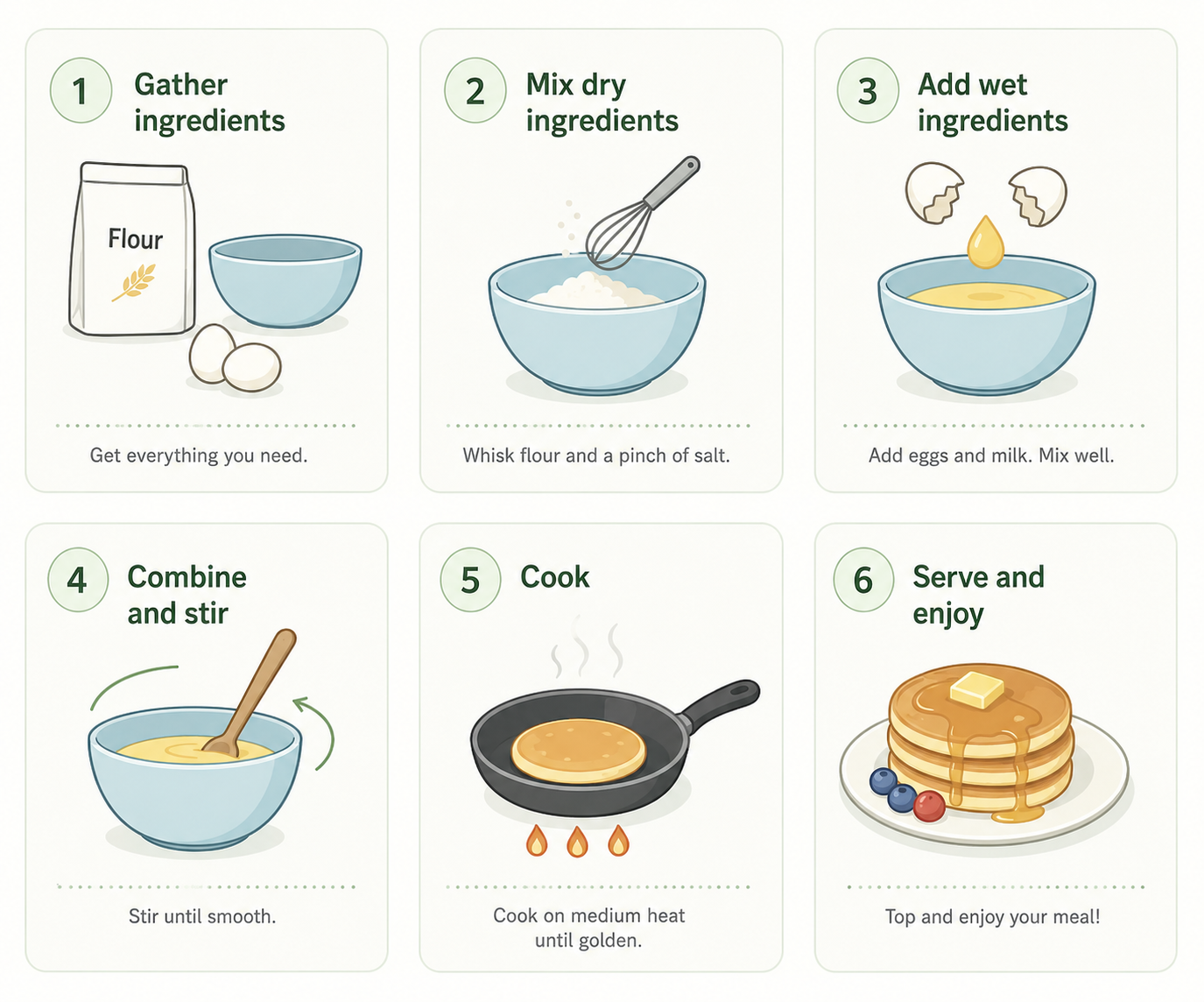
What is an algorithm?
Informatics is the automated processing of data.
DEFINITION
Algorithm
An algorithm is a well-defined, step-by-step procedure that leads to a desired result.
DEFINITION
AI FOUNDATIONS
SESSION 1
DEFINITION
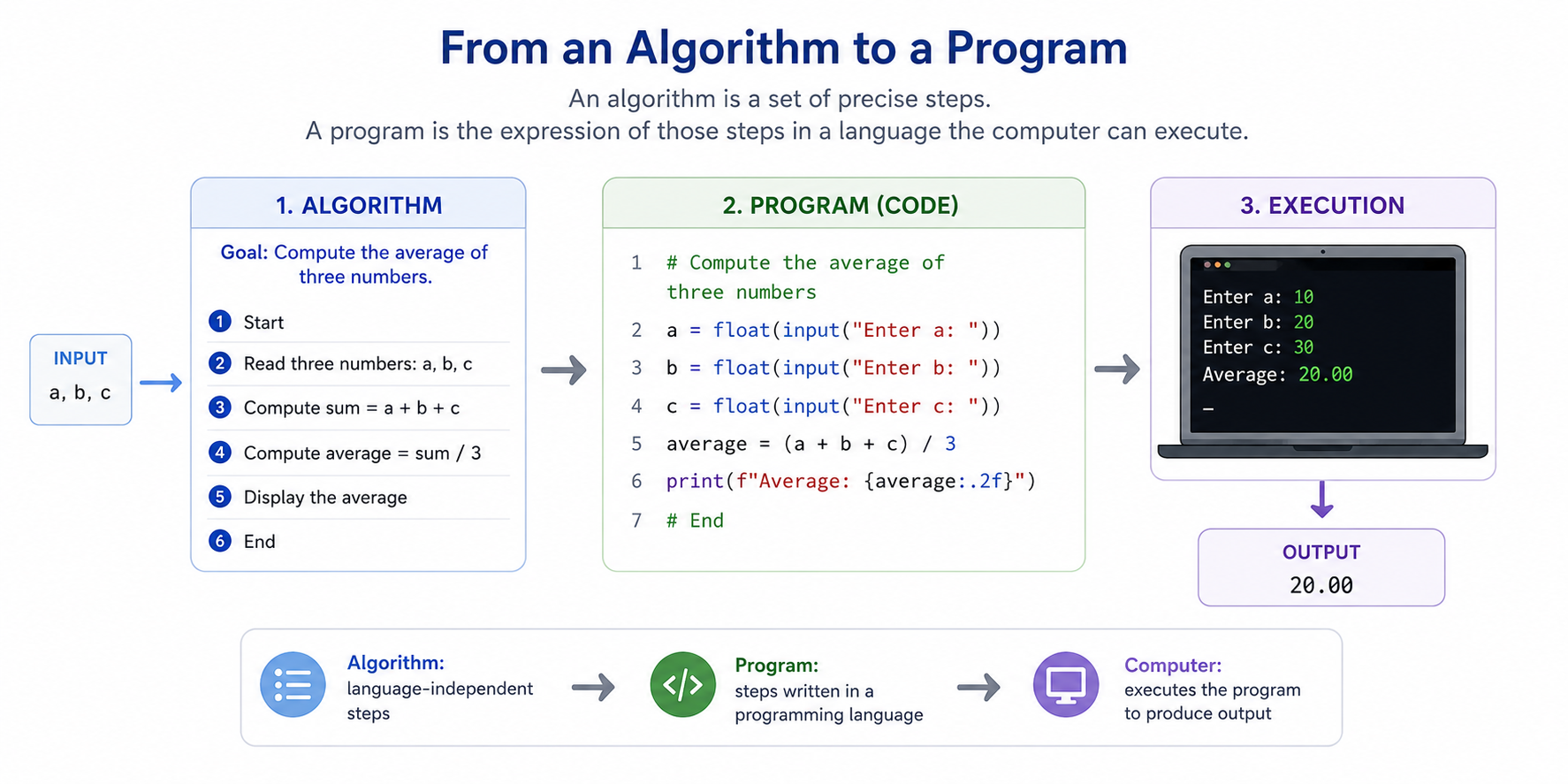
From an Algorithm to a Program
AI FOUNDATIONS
SESSION 1
DEFINITION
When a Program becomes AI

Informatics is the automated processing of data.
DEFINITION
Artificial Intelligence
An engineered computational system that can perform tasks usually associated with human cognitive abilities.
AI goes far beyond ChatGPT!
AI is a fuzzy concept!
AI FOUNDATIONS
SESSION 1
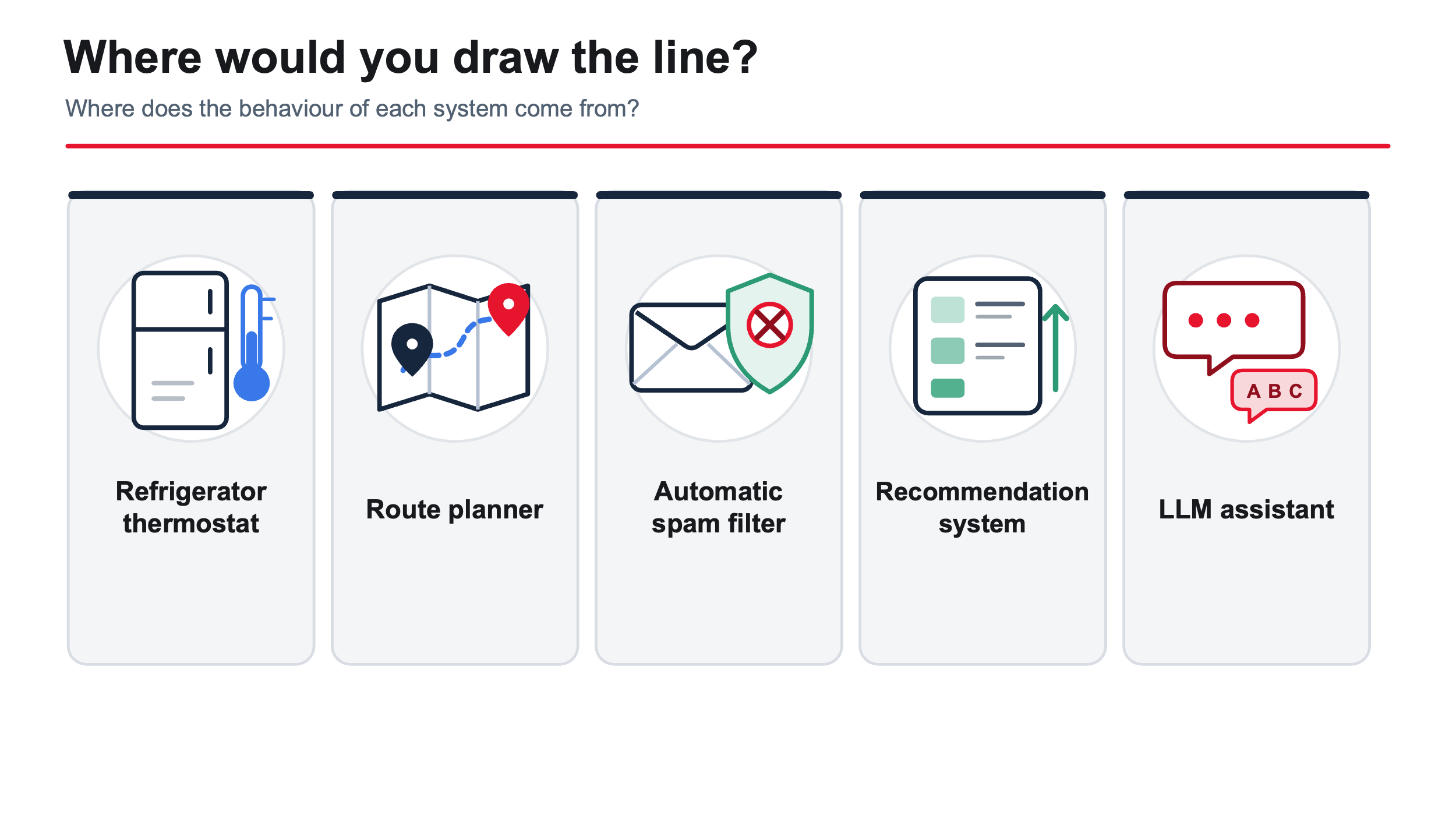
Where would you draw the line?
AI FOUNDATIONS
SESSION 1
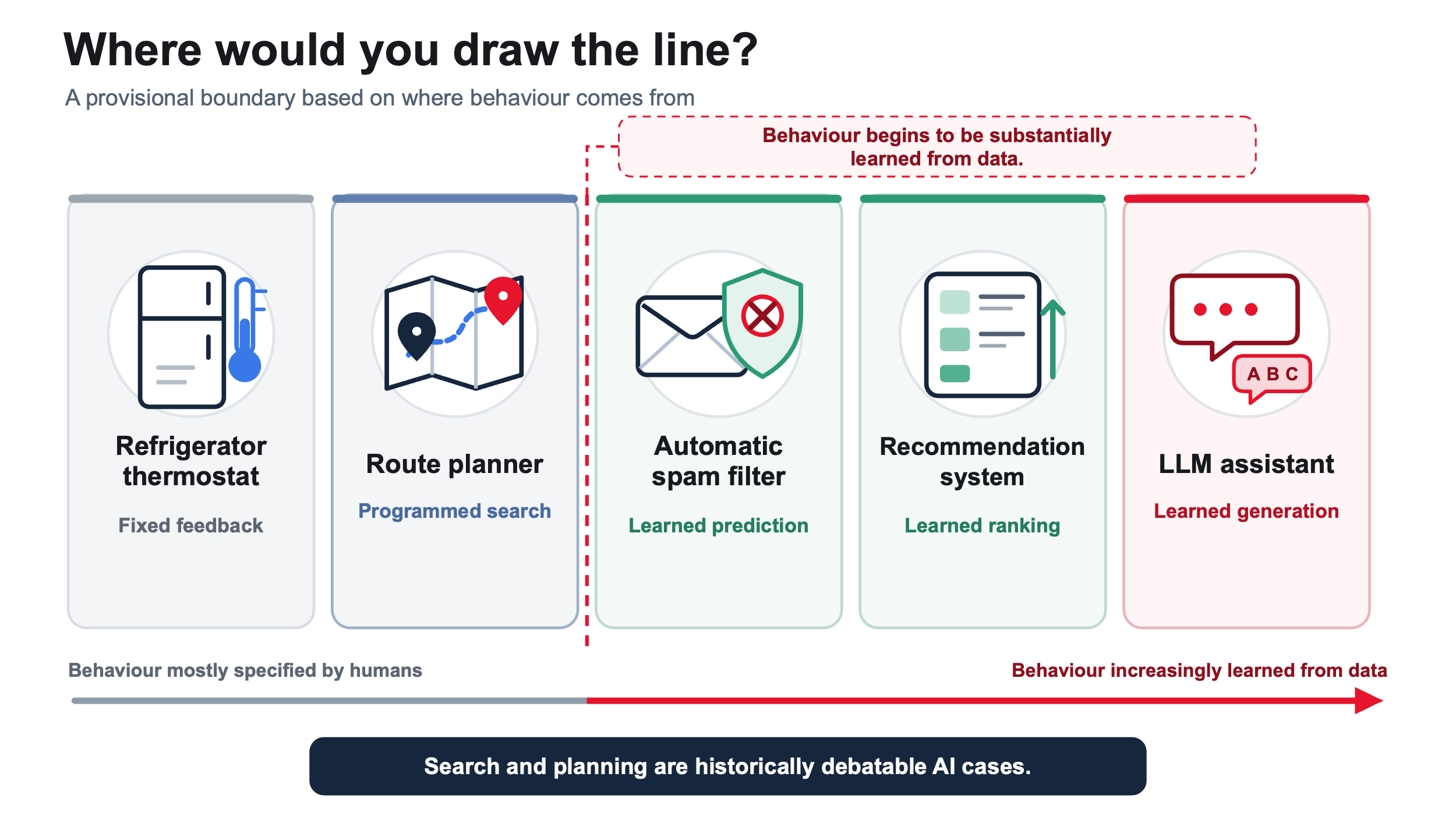
Where would you draw the line?
AI FOUNDATIONS
SESSION 1
DEFINITION
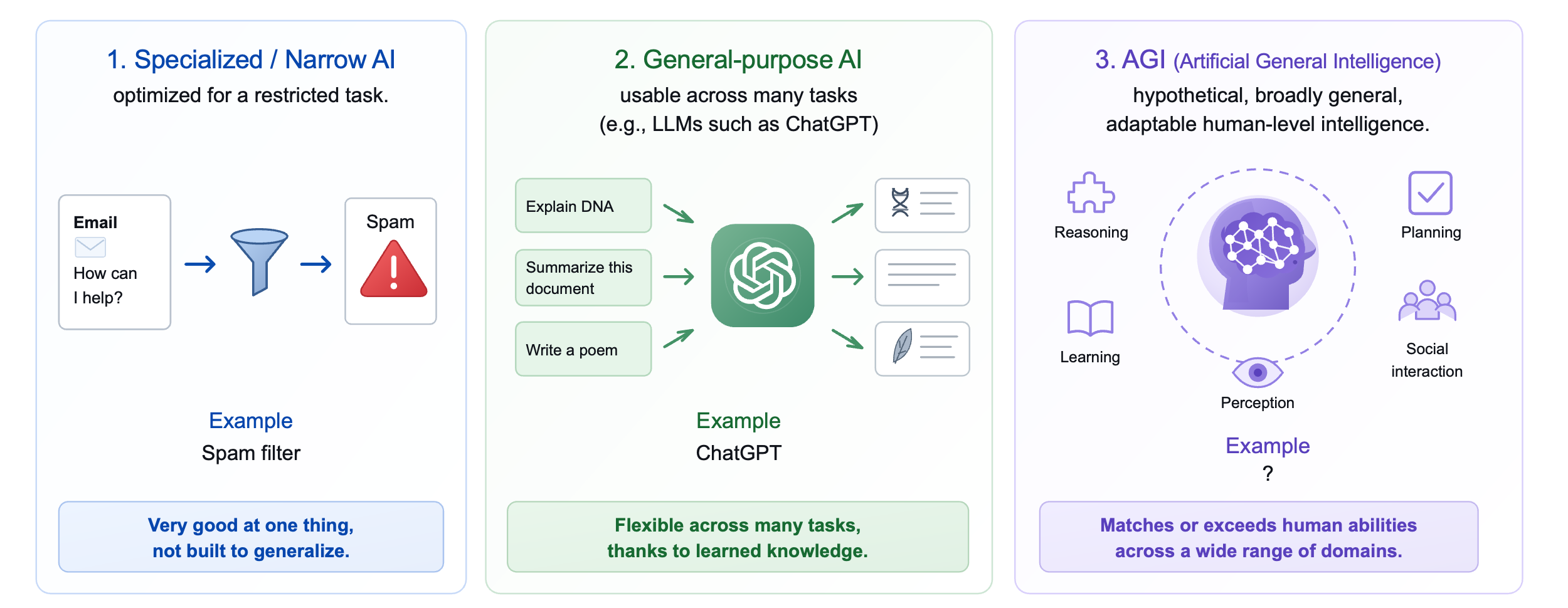
AI in terms of Capabilities
We can distinguish two types of AI systems
AI FOUNDATIONS
SESSION 1
DEFINITION
AI in terms of Capabilities
Or three…
AI FOUNDATIONS
SESSION 1
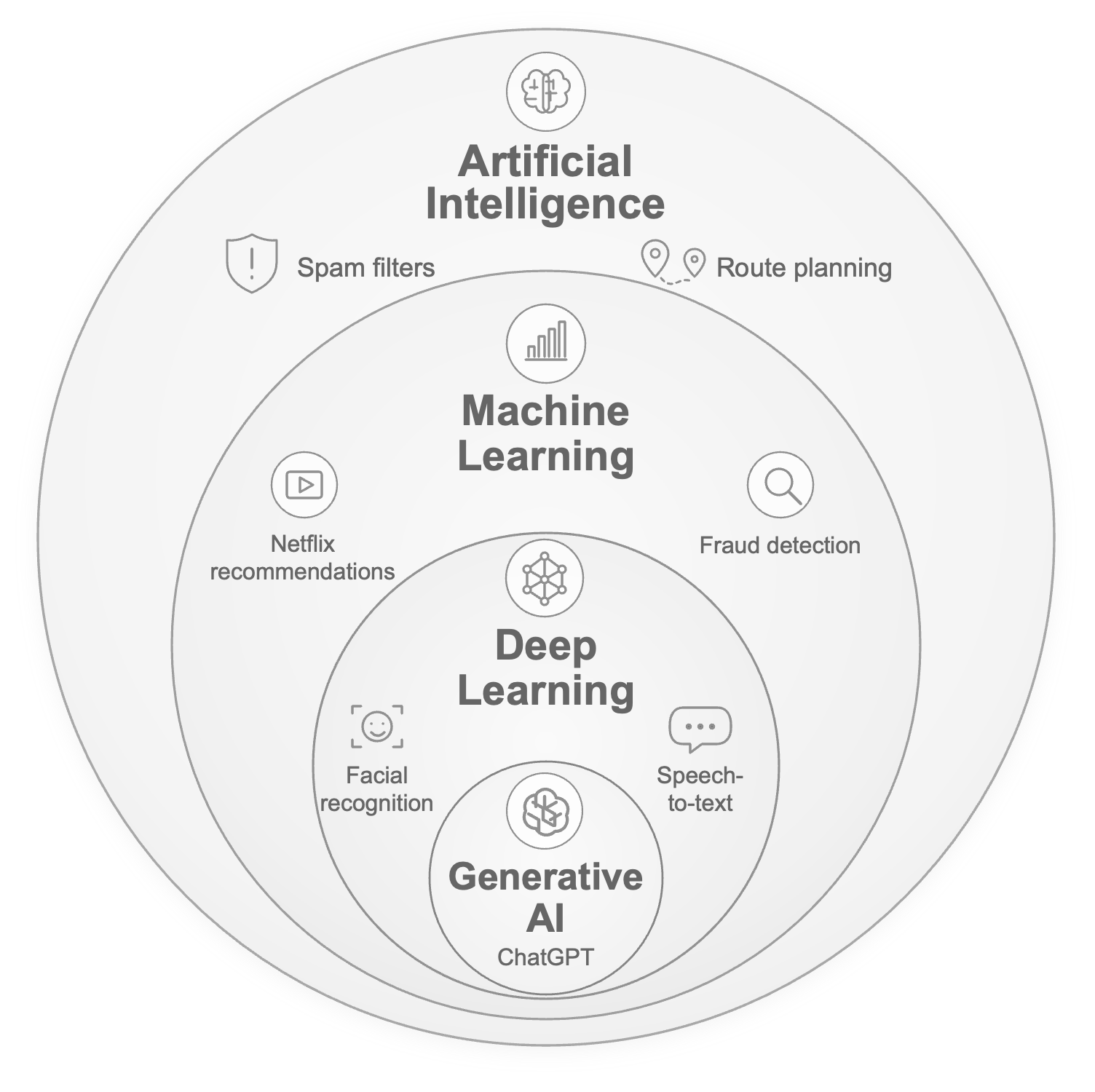
Clarifying the AI landscape
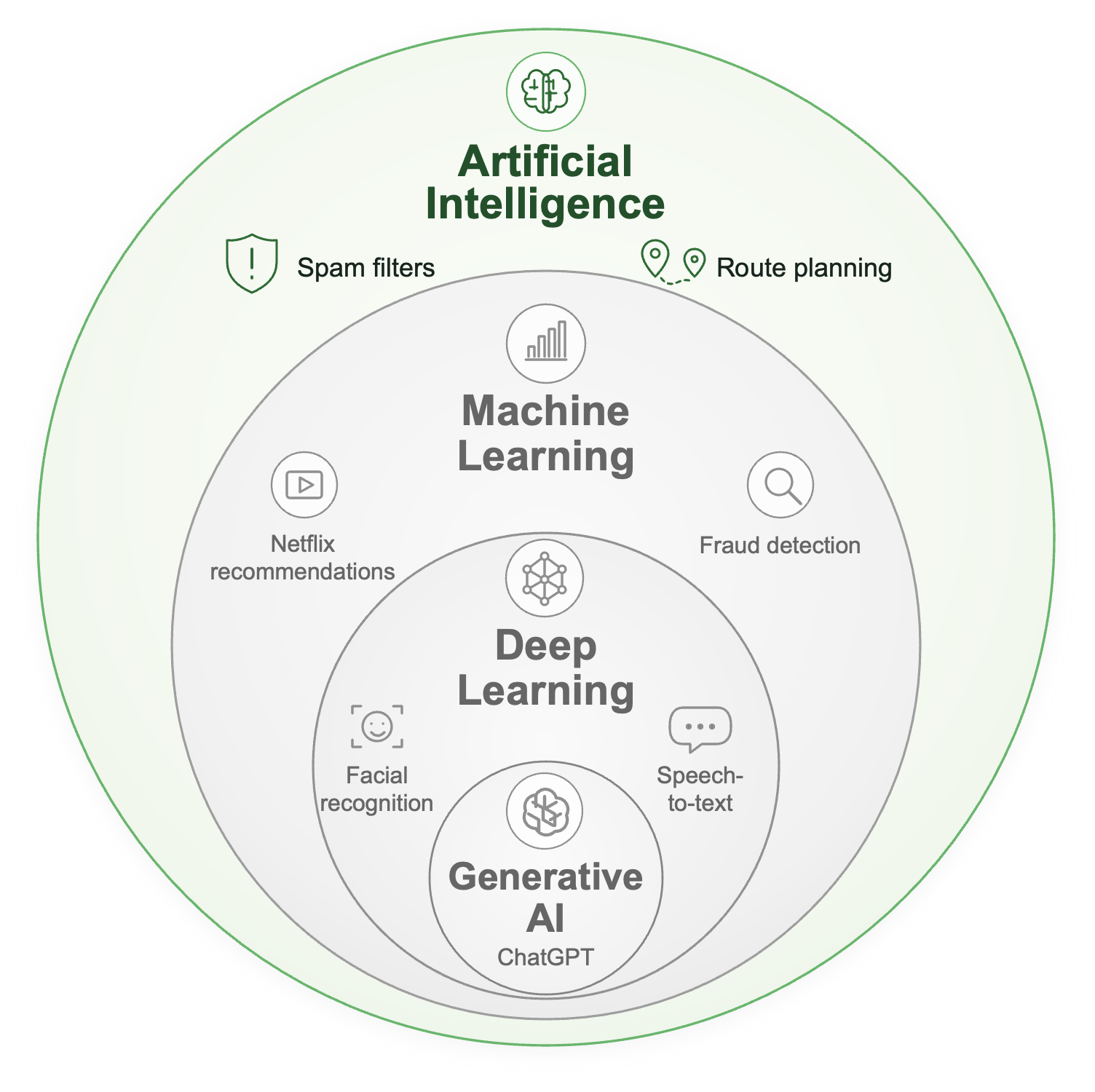
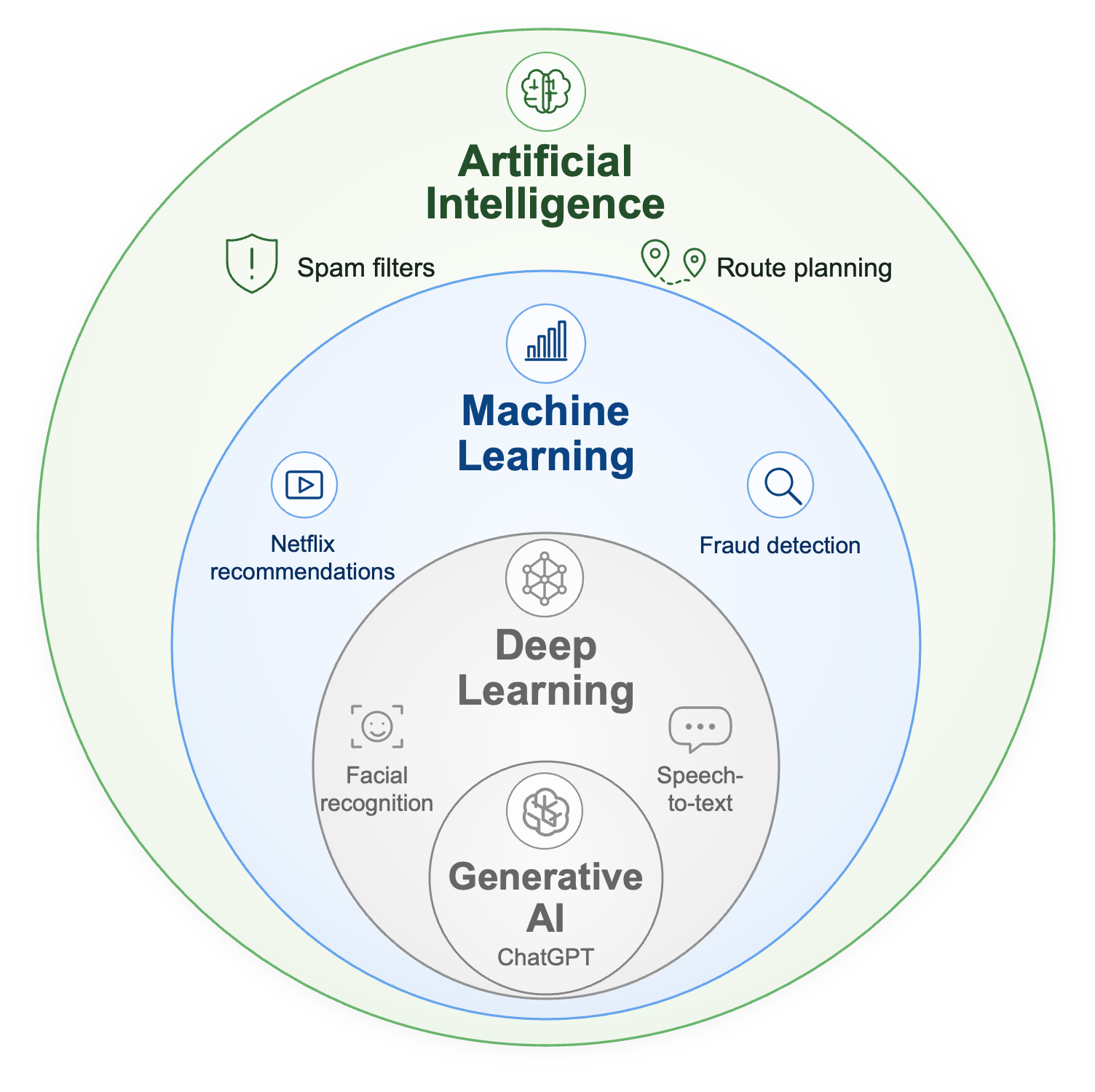
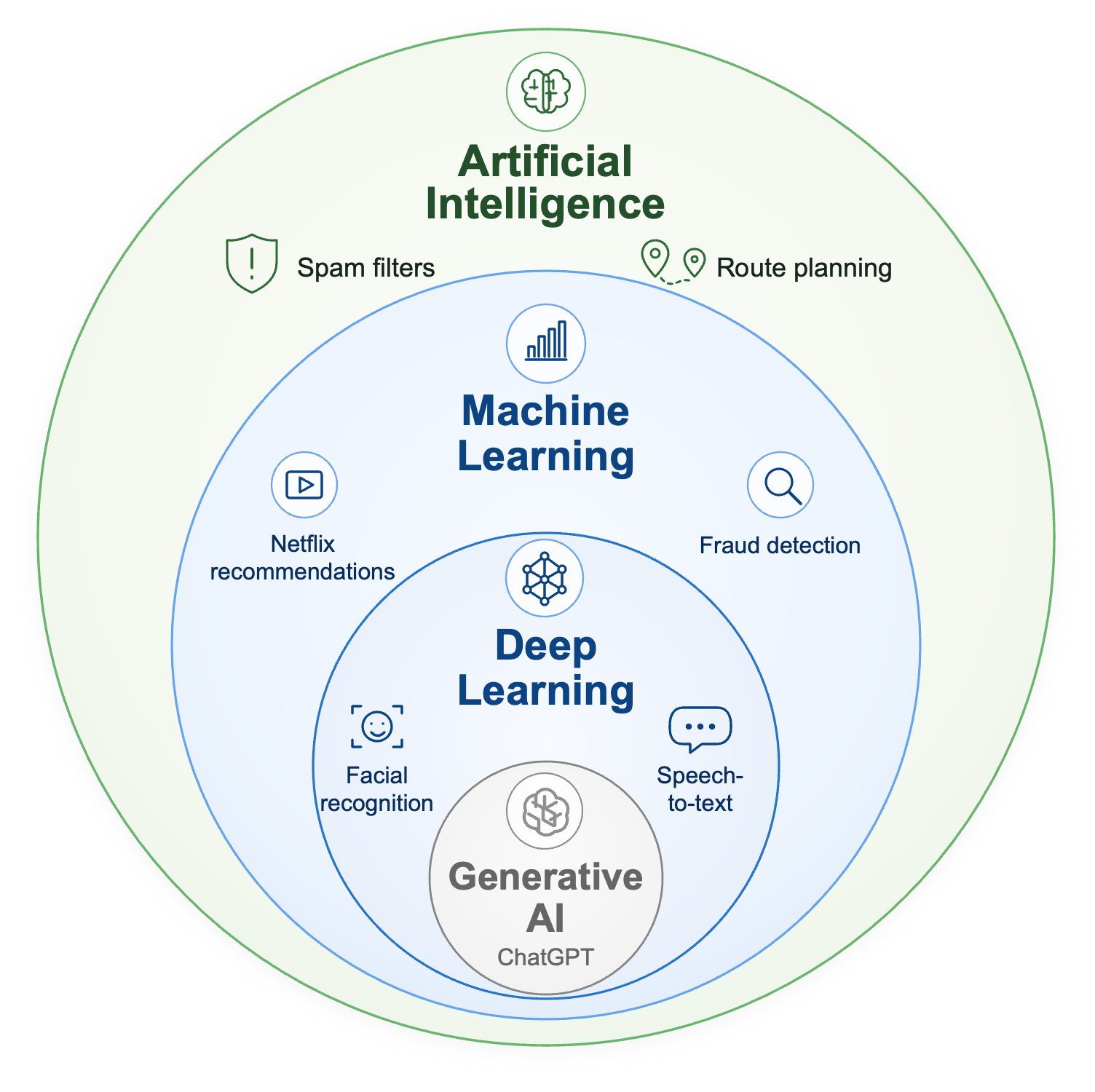
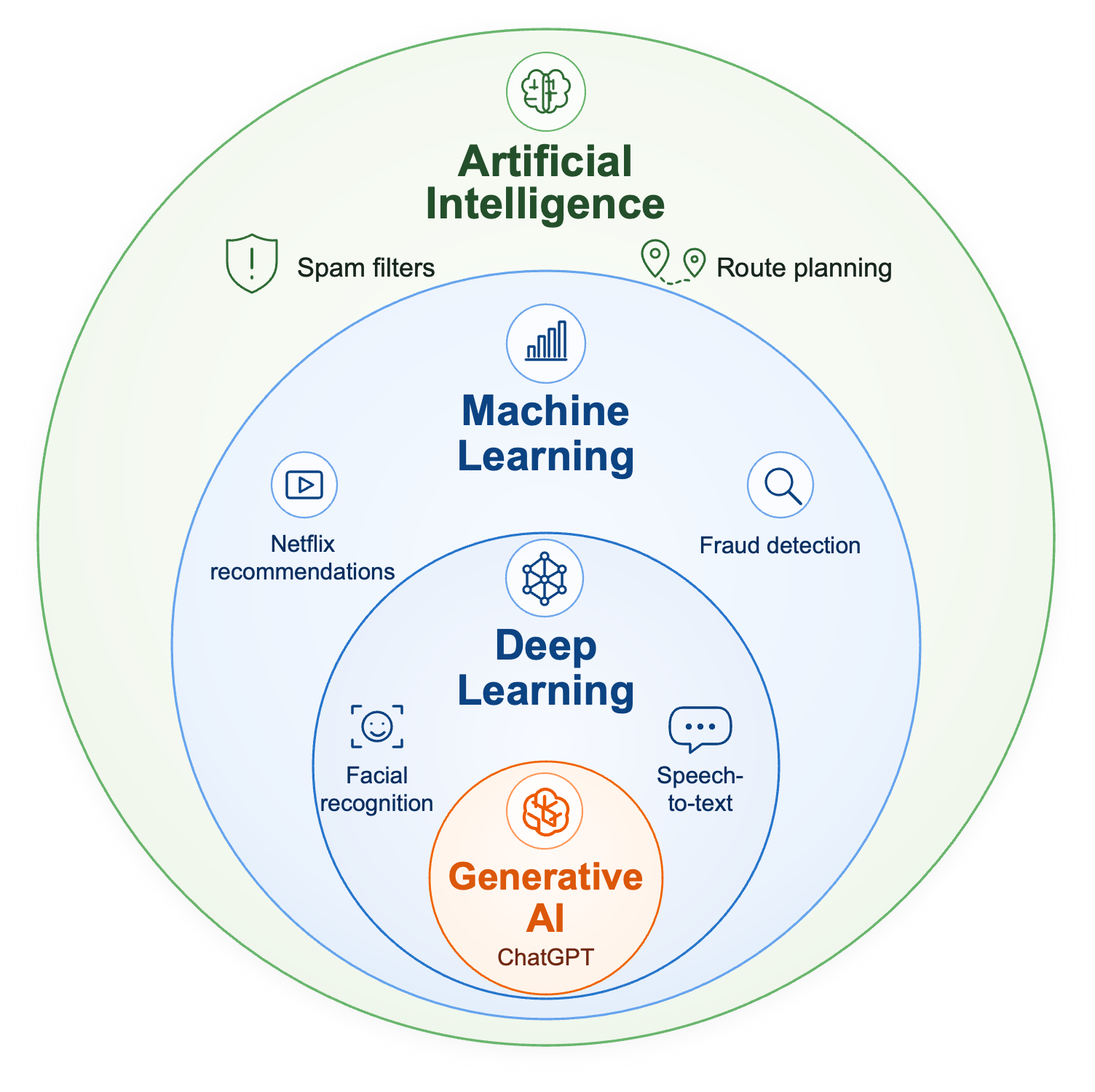
•Artificial intelligence (AI): the broad field of systems performing tasks associated with human intelligence.
•Machine learning (ML): a branch of AI in which systems learn patterns from data.
•Deep learning: a branch of machine learning based on multilayer neural networks.
•Generative AI: deep-learning systems that generate new content, such as text, images, audio, video, or code.
AI FOUNDATIONS
SESSION 1
Clarifying the AI landscape
•Artificial intelligence (AI): the broad field of systems performing tasks associated with human intelligence.
•Machine learning (ML): a branch of AI in which systems learn patterns from data.
•Deep learning: a branch of machine learning based on multilayer neural networks.
•Generative AI: deep-learning systems that generate new content, such as text, images, audio, video, or code.
AI FOUNDATIONS
SESSION 1
Clarifying the AI landscape
•Artificial intelligence (AI): the broad field of systems performing tasks associated with human intelligence.
•Machine learning (ML): a branch of AI in which systems learn patterns from data.
•Deep learning: a branch of machine learning based on multilayer neural networks.
•Generative AI: deep-learning systems that generate new content, such as text, images, audio, video, or code.
AI FOUNDATIONS
SESSION 1
Clarifying the AI landscape
•Artificial intelligence (AI): the broad field of systems performing tasks associated with human intelligence.
•Machine learning (ML): a branch of AI in which systems learn patterns from data.
•Deep learning: a branch of machine learning based on multilayer neural networks.
•Generative AI: deep-learning systems that generate new content, such as text, images, audio, video, or code.
AI FOUNDATIONS
SESSION 1
Clarifying the AI landscape
•Artificial intelligence (AI): the broad field of systems performing tasks associated with human intelligence.
•Machine learning (ML): a branch of AI in which systems learn patterns from data.
•Deep learning: a branch of machine learning based on multilayer neural networks.
•Generative AI: deep-learning systems that generate new content, such as text, images, audio, video, or code.
AI FOUNDATIONS
SESSION 1
Rules to Deep Learning: The Evolution of Spam Filtering
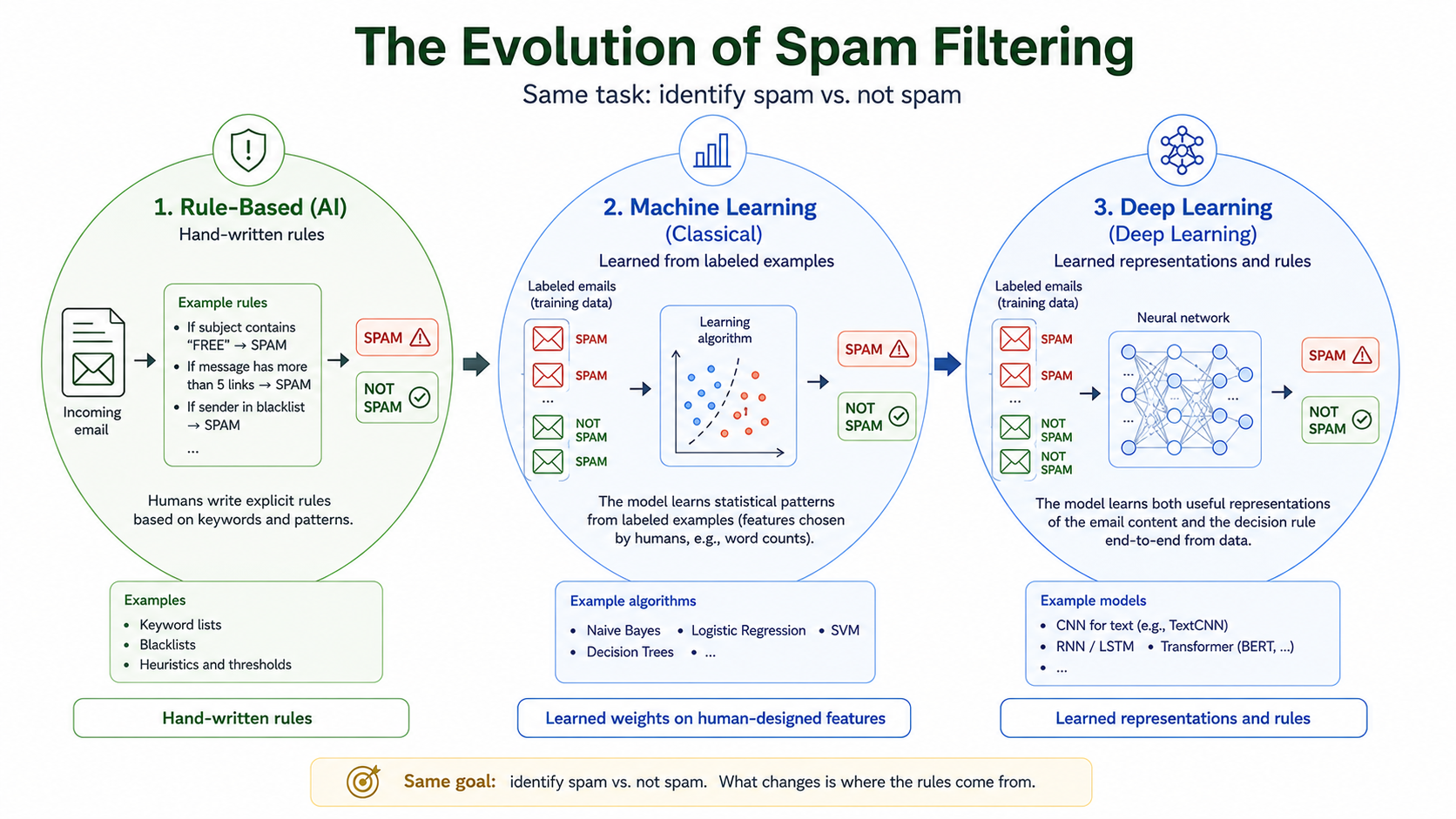
Spam filtering progressed from hand-written rules to learned features and representations, while the underlying task remained unchanged.
A BRIEF HISTORY OF AI
FROM RULES TO LEARNED BEHAVIOUR
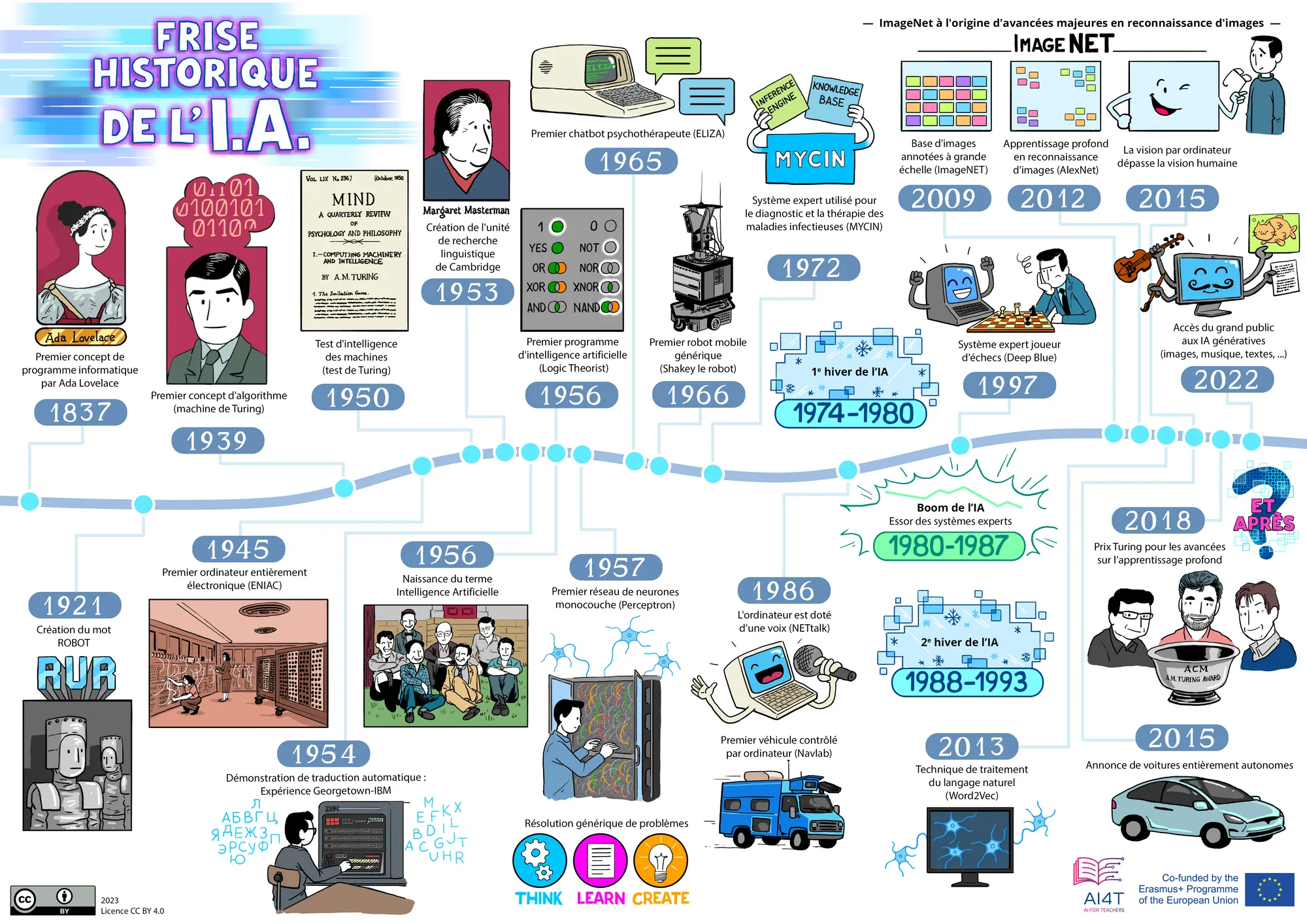
A BRIEF HISTORY OF AI
FROM RULES TO LEARNED BEHAVIOUR
THE CENTRAL QUESTION
From where AI’s intelligence should come from?
Rules written by humans or patterns learned from data?
•RULES: explicit and interpretable
•LEARNING: adaptive and data-driven
A BRIEF HISTORY OF AI
FROM RULES TO LEARNED BEHAVIOUR
1. FOUNDATIONS · 1939–1950
From computation to machine intelligence
Turing formalizes what machines can compute and proposes a behavioural test for intelligence.
•TURING MACHINE: formalizes computation
•TURING TEST: evaluates observable behaviour
A BRIEF HISTORY OF AI
FROM RULES TO LEARNED BEHAVIOUR
2. A FIELD EMERGES · 1956–1957
Two paths appear from the start
Dartmouth’s Summer Workshop names the field; two competing intuitions are present from the beginning.
•LOGIC THEORIST: symbols and explicit reasoning
•PERCEPTRON: learning from examples
A BRIEF HISTORY OF AI
FROM RULES TO LEARNED BEHAVIOUR
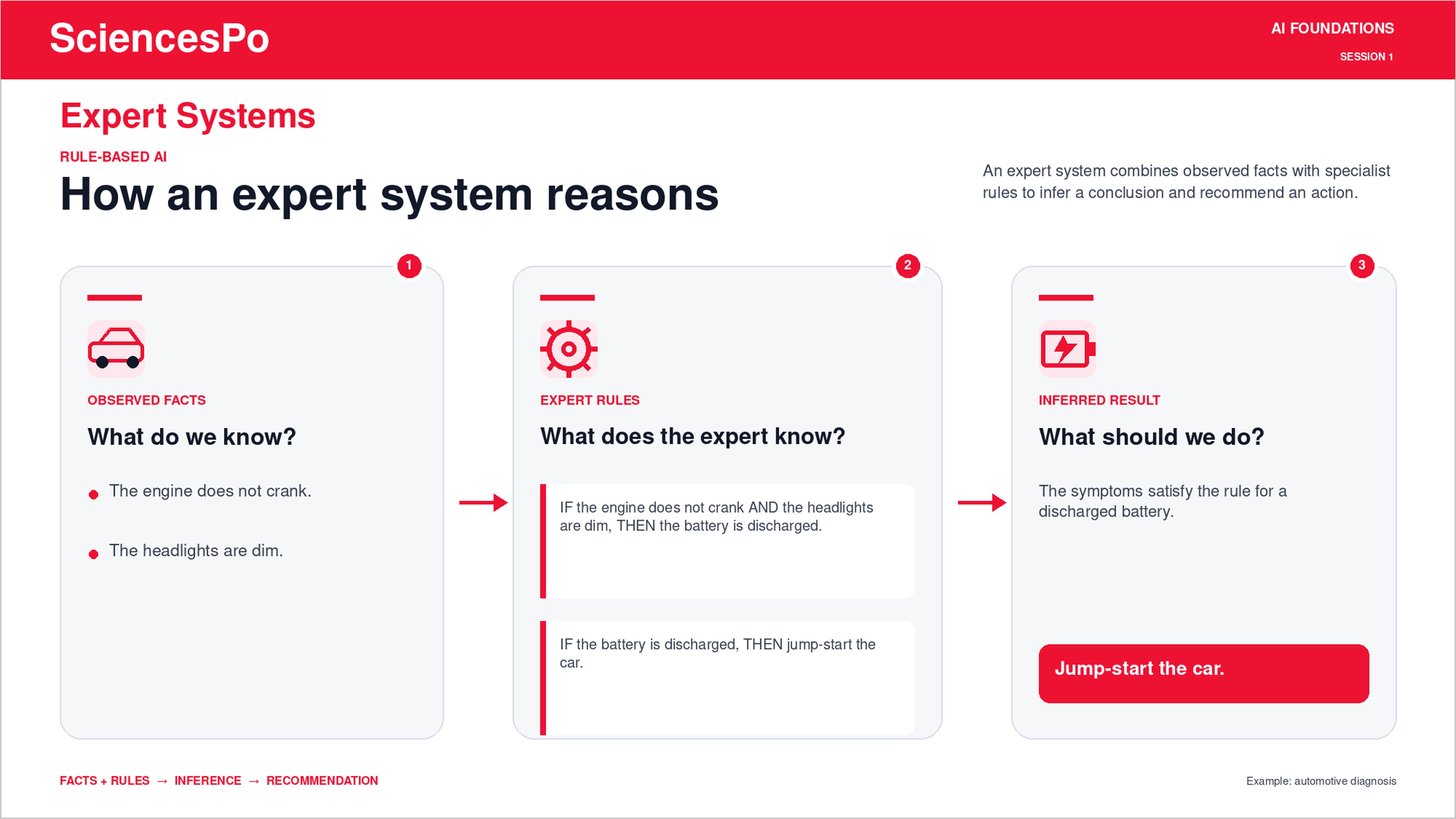
3. SYMBOLIC AI · 1965–1972
Intelligence as rules and representations
Knowledge is encoded explicitly, then manipulated through formal procedures.
•ELIZA: pattern matching
•SHAKEY: perception and planning
•MYCIN: expert rules
A BRIEF HISTORY OF AI
FROM RULES TO LEARNED BEHAVIOUR
A BRIEF HISTORY OF AI
FROM RULES TO LEARNED BEHAVIOUR
4. EXPERT SYSTEMS & AI WINTERS
Hand-coded knowledge reaches its limits
Expert systems make reasoning explicit, but hand-coded knowledge is difficult to scale.
•STRENGTH: interpretable decisions
•LIMITS: brittle rules and costly maintenance
•AI WINTERS: expectations exceed reliability
A BRIEF HISTORY OF AI
FROM RULES TO LEARNED BEHAVIOUR
5. THE STATISTICAL TURN · 1990s
From writing rules to learning patterns
Data, probability and optimization become central to practical AI.
•APPLICATIONS: spam, fraud, ranking and speech
•DEEP BLUE: search, compute and specialized design
A BRIEF HISTORY OF AI
FROM RULES TO LEARNED BEHAVIOUR
6. DEEP LEARNING · 2009–2015
Systems learn representations
Data, compute and better architectures make neural networks dramatically more effective.
•IMAGENET / ALEXNET: vision
•WORD2VEC: language
•AUTONOMY: learned perception in action
A BRIEF HISTORY OF AI
FROM RULES TO LEARNED BEHAVIOUR
7. GENERATIVE AI · 2017–TODAY
From prediction to generation and action
Transformers and large-scale pretraining create adaptable, conversational models.
•TRANSFORMER: foundation models
•CHATGPT: mass access
•NEXT: multimodal systems, tools and agents
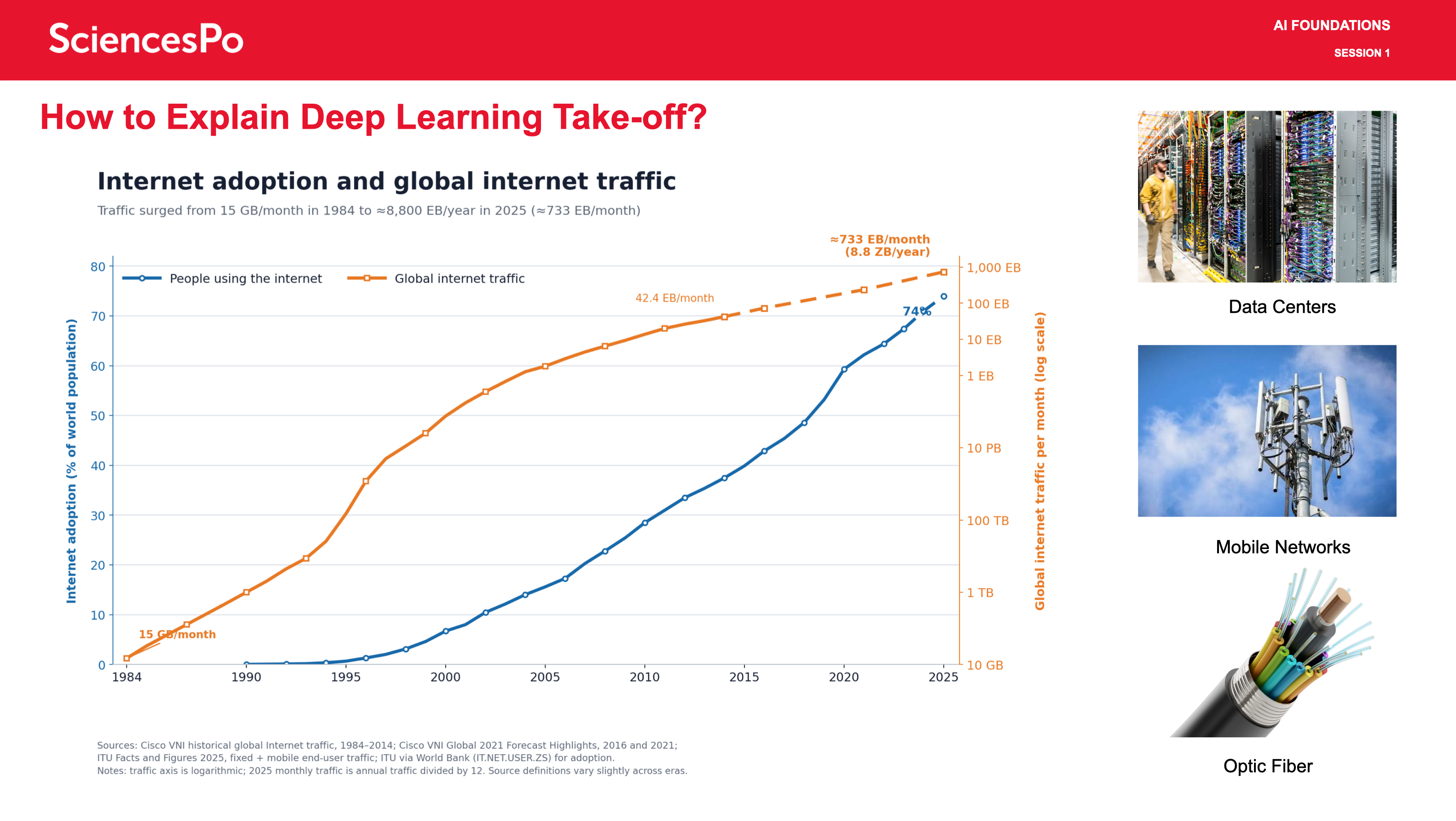
AI FOUNDATIONS SESSION 1 How to Explain Deep Learning Take-off? Data Centers Mobile Networks Optic Fiber
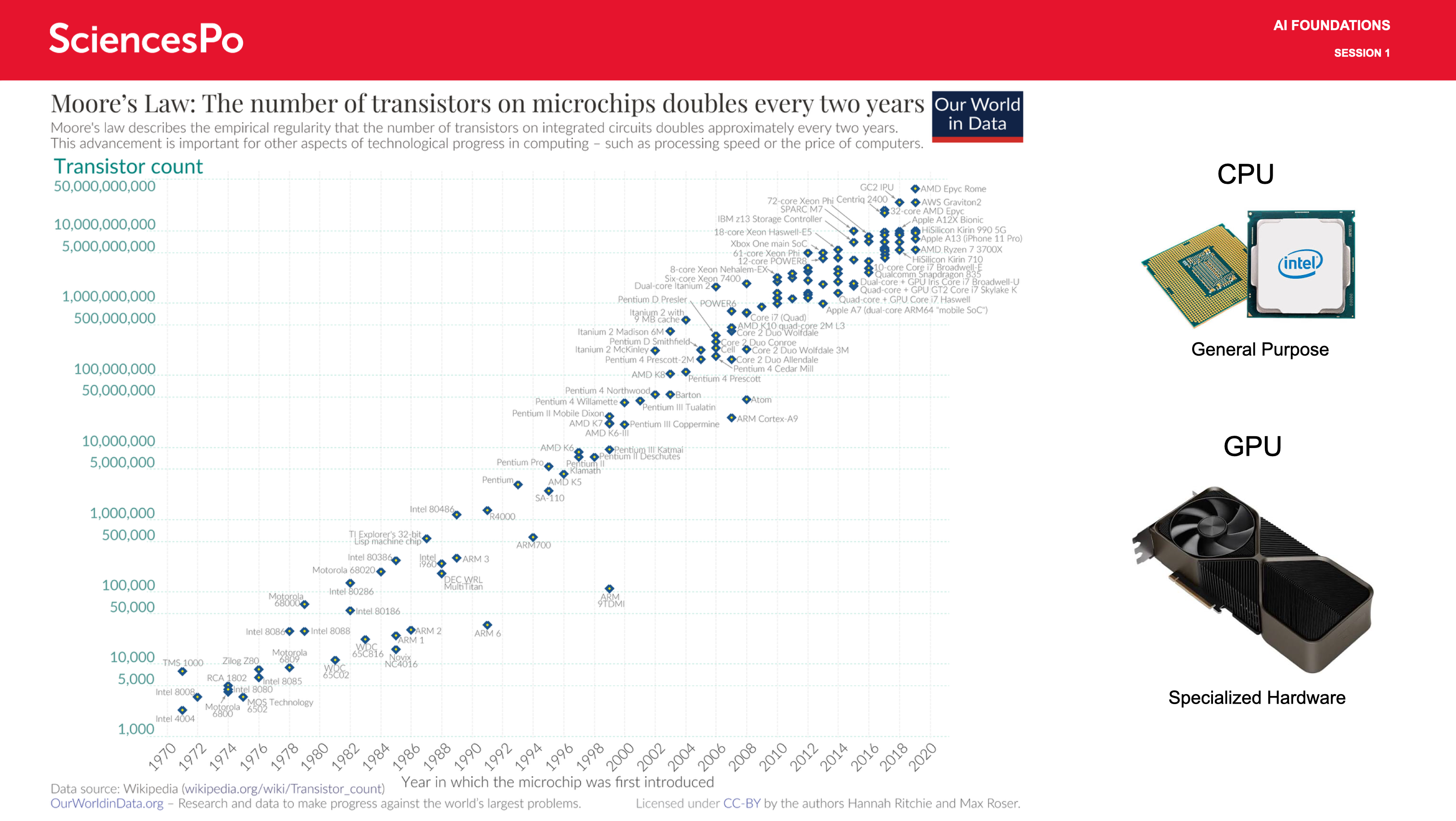
AI FOUNDATIONS SESSION 1 CPU General Purpose GPU Specialized Hardware
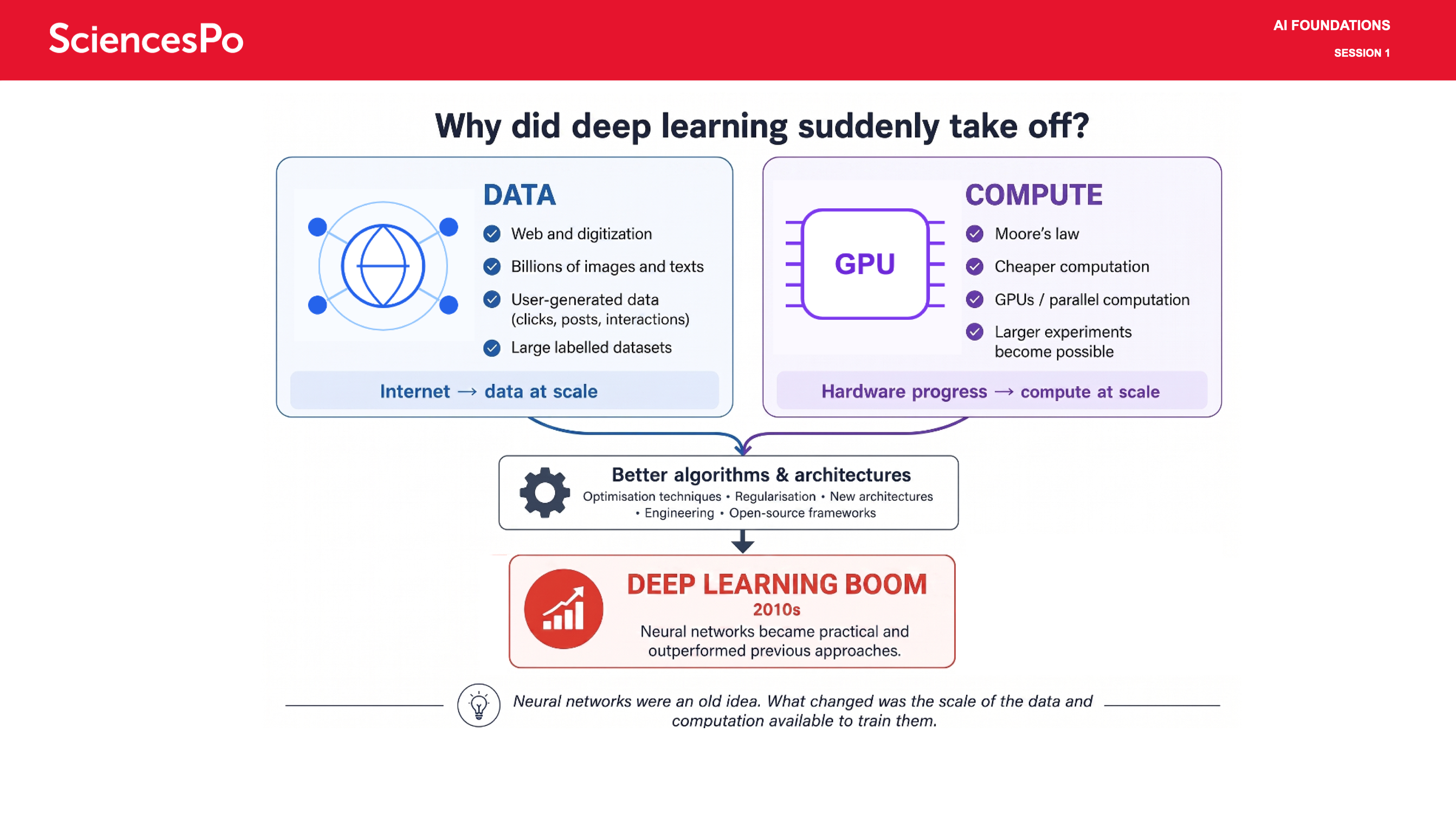
AI FOUNDATIONS SESSION 1
AI FOUNDATIONS
SESSION 1
Wrapping-Up
Every AI system is a program. Not every program is AI.
FOUNDATIONS
EVOLUTION
ALGORITHMS AND PROGRAMS
Algorithms define procedures; programs make them executable.
AI HAS FUZZY BOUNDARIES
The label reflects human-like capabilities—not a universal technical cut-off.
AI IS BROADER THAN CHATGPT
ML is a subset of AI; deep learning is a subset of ML; generative AI creates new content.
BEHAVIOUR CAN BE WRITTEN OR LEARNED
Systems use explicit rules, patterns learned from data, or both.
THE FIELD SHIFTED TOWARD LEARNING
Symbolic systems → statistical ML → deep learning → generative AI.
SCALE ENABLED MODERN AI
More data, greater compute and better architectures unlocked useful learned representations.
AI FOUNDATIONS
SESSION 1
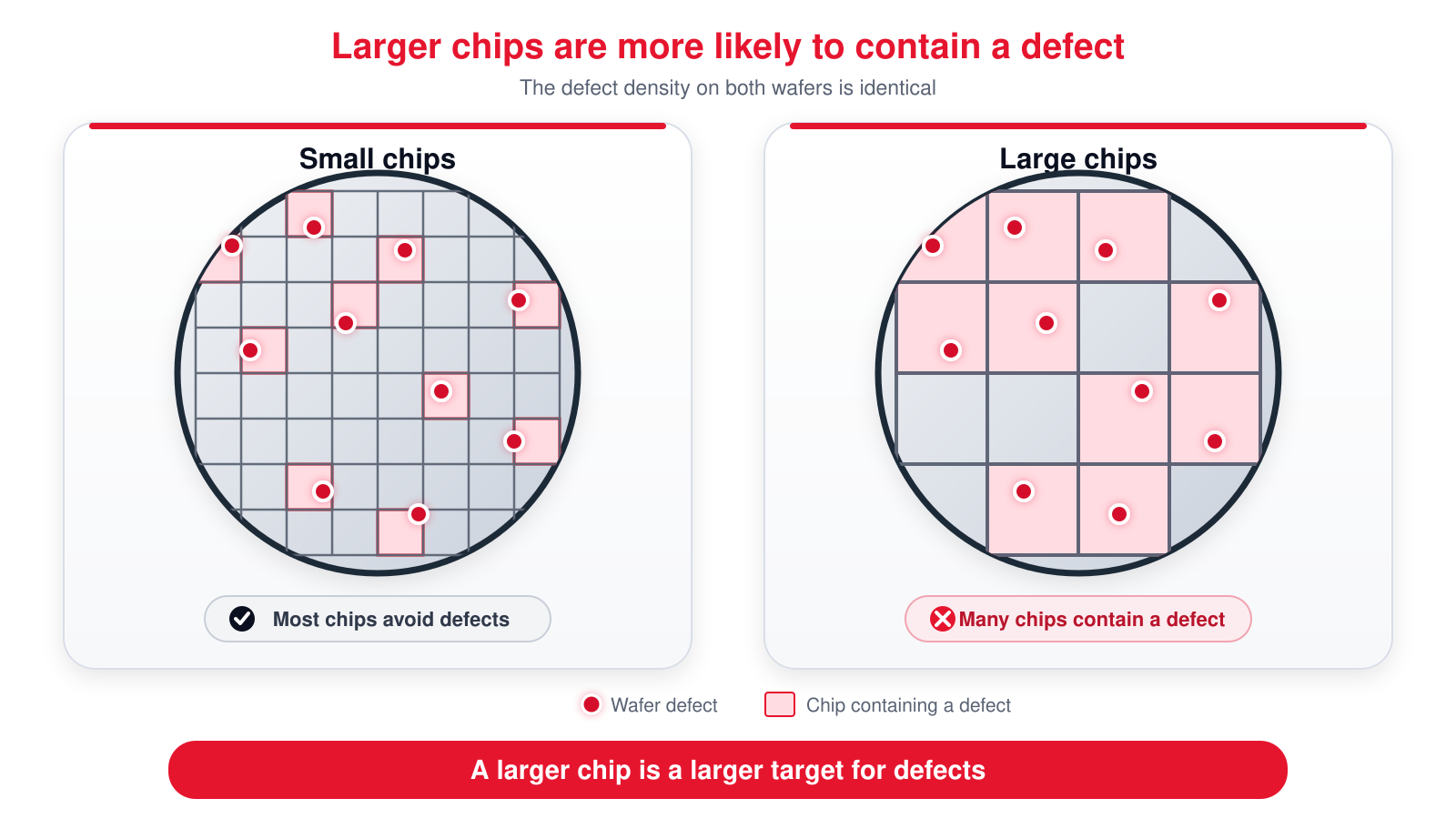
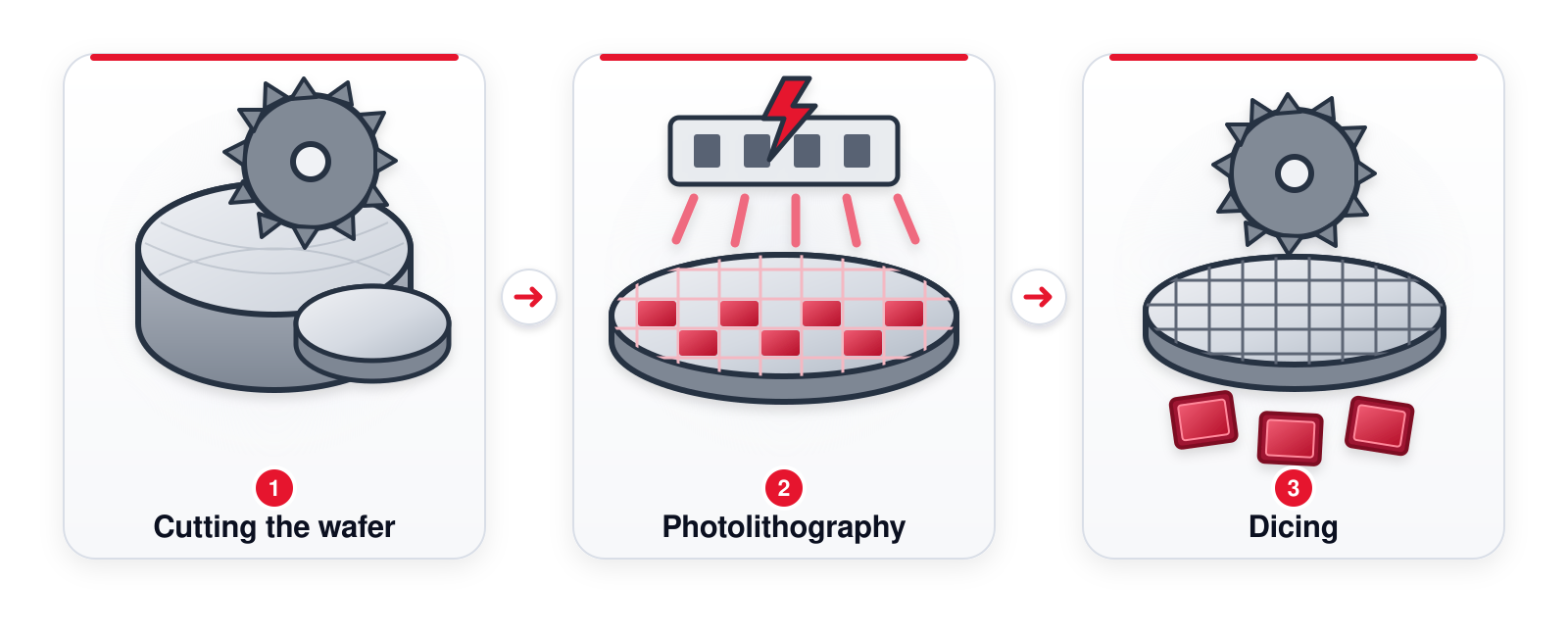
Bonus – Why can’t we have larger chips?
AI FOUNDATIONS
SESSION 1
Bonus – Why can’t we have larger chips?